
Israel’s currency is called the Shekel. It’s a unique name. Where did it come from? It’s one the questions we received when we started our series called Israel Currency 101. Who better to answer to question than a Hebrew teacher! So, we reached out to Seth Young, whose been teaching Hebrew for 30-years to thousands of students around the world. He not only answers why it’s called the Shekel, but gave us a small Hebrew lesson along the way.
Q&A with Seth (Shimson) Young, founder of ExecutiveHebrew.com
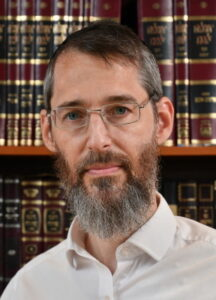
A: The word “shekel” comes from the Hebrew root ש-ק-ל (sh-q-l), which means “to weigh”. The word itself originally meant a coin of a specific weight, or that weight itself, in numerous places in the Tanach (the Hebrew Bible). For example:
וַיִּשְׁקֹל אַבְרָהָם…אַרְבַּע מֵאוֹת שֶׁקֶל כֶּסֶף…” (בראשית כג:טז)”
“And Abraham weighed… four hundred shekels of silver…” (Genesis 23:16)
In modern times, the State of Israel used this Biblical name for its currency starting in 1980.
Q: As you just explained, the Hebrew root of the word Shekel is ש-ק-ל (sh-q-l), which means “to weigh”. What’s the connection?
A: As I mentioned, the “shekel” was both the name of a certain weight and a coin of that weight. While today we have coins, “paper” money and even digital money, it is my understanding that in times past “money” was based on coins which consisted of a certain amount (weight) of a precious metal whose value was based on the value of the precious metal itself. Therefore, the weight of the coin times the value of the metal it was made of was its actual value. In other words, weight and value went hand in hand.
Q: The Israeli Shekel is broken down into Agorot. One Shekel=100 Agorot. Where does that name come from? Is it also Biblical?
A: Yes, it is. The word is used just once in the Tanach, in the first Book of Samuel, 2:36, and means a coin of small value. In Israel there is an institution called (in English) the Academy of the Hebrew Language, which is the “”supreme institution for scholarship on the Hebrew language,” and the Academy attempts, where possible, to use Biblical Hebrew words to create Modern Hebrew words for modern concepts. The Academy chose the term “agora” (plural: agorot) to represent 1/100th of a shekel when the shekel was first introduced.
Q: What is the difference between saying shkalim (שקלים, pronounced sheh-ka-LEEM) and shekel (שקל)?
A: “Shekel” is the singular, as in “one shekel”. In Hebrew, ALL nouns are either masculine or feminine, and “shekel” is masculine. The “eem” ending is the masculine plural ending in Hebrew, so “shkalim” just means “shekels”, as in “ten shkalim”.
Q: Is there any Hebrew slang for Israeli money, like bucks or cash?
A: First of all, the general term for money is כֶּסֶף (KEH-sehf) is the same as the word for “silver”. The word for a coin is מַטְבֵּעַ (mat-BEH-ah) and the word for a bill/banknote is שְׁטָר (shtar).
There are a number of slang words related to money which are used with varying degrees of frequency. In no particular order, some which you might hear are:
מְרַשְׁרְשִׁים – paper money (מרשרש means “rustles”)
בּוּכְטָה – a large amount (of money or other things)
כֶּסֶף קָטָן \ גְּרוּשִׁים – a small amount of money, small change
שְׁנֶקֶל – a two-shekel coin (contraction of שְׁנֵי שֶׁקֶל)
עֲשִׂירִיָּה – a ten-shekel coin
אַלְפִּייָּה – a thousand shekels (can be used for other currencies as well)
Q: Shekels are bills/banknotes as well as coins. What are the various denominations for those?
A: Regarding shekel coins, there are one-, two-, five- and ten-shekel coins, and the bills/bank notes are for 20, 50, 100 and 200 shekels.
Q: What about the Agorot, which only come in coins? What are the denominations of those coins?
A: The agorot coins come in values of 10 and fifty agorot (really a half-shekel). There used to be one agora and five agorot coins as well, but due to inflation their value became so small that they were removed from circulation.
Q: Your expertise is teaching Hebrew, that’s why we turned to you. What other terms related to money can you share with us, maybe a short lesson?
A: Oops! You and I have already mentioned most of the important Hebrew words related to money. Of course, a good knowledge of how to say numbers in Hebrew is important to say how much money you have or ask how much something costs. But I will give you one more useful Hebrew word: מְזֻמָּן (me-zoo-MAN), which means “cash” in Hebrew, as opposed to a check, payment by credit card, etc. I also heard this term used once to mean money that was not tied up, i.e. available to be invested.
Q: How did you get into teaching Hebrew?
A: It was an accident! I have been building and monetizing websites for many years. Back in 2006 I happened to buy a high-traffic website as an investment for my company, as I felt I could make more money from it than the previous owner. This site was related to learning Hebrew (https://dictionary.co.il). As I worked on improving it, I made an important addition that would have helped me when I was learning Hebrew – a free Hebrew word-a-day email list so people could steadily improve their Hebrew vocabulary. That list took off, which lead to me selling Hebrew products to the subscribers, and then to my developing Hebrew courses to teach them Hebrew. I discovered I had quite a knack for teaching the language, and I soon became the main teacher.
Q: If people are interested in learning from you, tell us how you work and how long does it take to start speaking Hebrew?
A: I now have many free websites for learning Hebrew, and I still have the free word-a-day email list, with about 30,000 subscribers. I have for-pay courses for a variety of budgets, from inexpensive pre-recorded classes, to small group classes via Zoom, and one-on-one Hebrew mentoring.
How long it will take to begin speaking Hebrew or reading Hebrew texts varies very much from person to person. It depends on the student’s current Hebrew level, their talent for learning languages, and how much time they are going to put into the process. My students come from a very wide range of backgrounds and locations, but I have found that I have something to help just about all of them move forward in their Hebrew, often much faster than they ever have before.
Contact Info:
Seth (Shimson) Young, Founder, ExecutiveHebrew.com
Phone: +972 52 852 5426
+1 267 678 1143
Seth (Shimshon) Young has been teaching students all over the world Hebrew for almost 20 years. His unique teaching methods, supportive teaching style and the many resources he shares with his students (many of which he developed himself) make him an especially effective teacher, as thousands of students can attest. He has lived in Israel with his growing family for over thirty years.